
Miki@bestsoapmachine.com
2026 Global Soap Manufacturing Trends: Why Small-Scale Soap Production Lines Are Dominating the Consumer Market
The global personal care and cleaning product industry is undergoing a profound transformation in 2026, driven by surging consumer demand for natural, sustainable, and customized soap products. As market research data reveals, the global handmade and natural soap market is experiencing robust growth, with a projected compound annual growth rate (CAGR) of 5.94%–8.2% from 2026 to 2033, and is expected to exceed USD 2.5 billion by 2033 . Against this backdrop, small-scale soap and soap bar production factories have emerged as the most viable and profitable business model, replacing traditional large-scale chemical soap manufacturing. Modern optimized small soap production lines have become the core equipment choice for new entrants and factory upgraders worldwide, balancing low investment, flexible production, and market trend adaptation.
Current 2026 Soap Industry Market Trends (Authoritative Industry Data Support)
Multiple 2026 global consumer behavior and industry reports confirm that the soap consumption market has completely shifted from “low-cost mass production” to “high-value personalized and eco-friendly consumption”, creating huge market gaps for small-scale production enterprises.
First, natural and vegan soap products have become mainstream consumer choices. In 2026, 48% of new soap products launched globally focus on vegan and pure natural customized formulas, while the demand for fragrance-free, hypoallergenic soap variants has increased by 33% year-on-year . Modern consumers are increasingly rejecting synthetic additives, chemical preservatives, and irritating ingredients in traditional industrial soaps, and prefer plant-based, organic, and skin-friendly soap products. This trend greatly limits the advantages of large-scale assembly line production with single formulas, while highlighting the flexible production strengths of small soap production lines.
Second, sustainable zero-waste production and packaging have become core industry competitiveness. Industry data shows that 47% of the global soap market growth in 2026 comes from zero-waste packaging and eco-friendly production models . Global consumers and cross-border e-commerce platforms have raised strict requirements for product biodegradability, carbon footprint, and packaging recyclability. Small soap factories can easily realize full-process green production through optimized small production lines, including low energy consumption, zero industrial waste liquid discharge, and biodegradable raw material processing, which is difficult for traditional large soap factories to achieve in the short term.
Third, personalized customization and multi-scenario segmentation drive market increment. The 2026 industry report points out that customized soaps for specific skin types, sensitive groups, household cleaning, and clothing washing have become the fastest-growing segmentation tracks . Unlike large-scale production lines that are only suitable for single standardized products, small-scale soap production lines support flexible switching of formulas, fragrances, shapes, and specifications, enabling factories to quickly respond to differentiated market needs and capture niche market profits.
Core Advantages of Small-Scale Soap Production Lines in 2026 Market Competition
According to Verified Market Reports and Global Growth Insights 2026 industry analysis, the threshold for global soap market entry is constantly changing. The traditional disadvantages of small factories, such as unstable output and single technology, have been completely resolved by modern automated small soap production lines, forming unique competitive advantages .
1. Low Investment and Fast Return, Suitable for Global Small and Medium Entrepreneurs
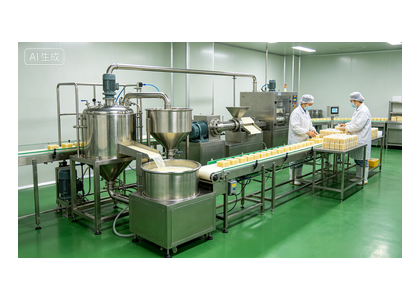
Large-scale soap production equipment requires tens of millions of dollars in investment and fixed large-scale plant support, with a long investment cycle. In contrast, modern small soap production lines integrate saponification, stirring, molding, cutting, and packaging into a compact system. The equipment covers a small area, has low energy consumption, and requires no complex industrial supporting facilities. It is fully adapted to small factory production modes. In 2026, the global number of small and medium-sized soap factories has increased by 24% year-on-year, and low equipment investment risk is the primary reason for industry entrepreneurship .
2. Flexible Production to Adapt to Diversified Market Trends
Combining the 2026 mainstream market demands of vegan formulas, plant essential oil blends, and fragrance-free hypoallergenic products, modern small production lines support free switching between cold process, hot process, and melt-pour soap production processes . Factories can adjust production formulas and product specifications according to seasonal demands, customer customization needs, and regional market preferences, avoiding the inventory backlog risk caused by single mass production. This flexible production model perfectly matches the current market characteristics of “small batch, multiple varieties, and fast iteration”.
3. Green Production Meets Global Environmental Certification Standards
Global environmental protection policies and consumer green consumption concepts are becoming increasingly strict in 2026. European and American markets, which account for 61% of the global soap market share, have fully implemented eco-friendly product access standards . Optimized small soap production lines adopt closed-loop production technology, with no waste gas or waste liquid discharge during the production process, and can fully utilize natural plant raw materials to produce biodegradable soap products. Small factories relying on this equipment can easily pass international environmental protection and organic product certifications, opening up cross-border e-commerce and overseas physical market sales channels.
4. Stable Output and High Product Qualification Rate, Breaking Industry Stereotypes
Traditional small manual soap production has problems such as unstable product quality and low yield. The upgraded automated small soap production lines in 2026 realize precise temperature control, uniform stirring, and standardized molding, with a product qualification rate of over 98%, reaching the quality level of large industrial production lines . While maintaining the flexibility of artisanal soap, it solves the pain points of manual production instability, enabling small factories to achieve standardized and large-scale sales.
2026 Industry Outlook: Small-Scale Factories Will Occupy the Mainstream Market Share
Industry forecast data from 2026 to 2033 shows that the global natural soap market will maintain sustained high growth, and small and medium-sized production enterprises will gradually seize more than 50% of the market share . On the one hand, large traditional soap factories are restricted by rigid production lines and high transformation costs, making it difficult to quickly adapt to personalized and green market demands. On the other hand, small soap factories with flexible production lines, low operating costs, and fast market response capabilities can continuously iterate products according to consumer trends, forming strong market competitiveness.
In addition, the booming global private brand (OEM/ODM) customization market has further boosted the demand for small soap production lines. More beauty and wellness brands choose to cooperate with small professional soap factories for customized production, bringing stable order sources for small-scale production enterprises . For entrepreneurs and factory owners who are planning to enter the soap manufacturing industry in 2026, investing in a high-efficiency, green, and flexible small soap production line is the most cost-effective and forward-looking choice.
Conclusion
Driven by the 2026 global trends of natural environmental protection, personalized customization, and green consumption, the soap manufacturing industry has ushered in a new development era. Small-scale soap production lines have broken the monopoly of large-scale industrial production with their advantages of low investment, flexible production, green environmental protection, and high-quality output. In the next 5–8 years, small and medium-sized intelligent soap production factories will become the mainstream of the industry, bringing continuous and stable profit growth for global investors.
Data Sources: Future Market Report 2026, Global Growth Insights 2026 Industry Report, Verified Market Reports Global Handmade Soap Market Forecast 2026–2033, Business Research Insights Consumer Behavior Analysis Report.
Shijiazhuang Ruisheng Machinery Manufacturing Co., Ltd was established in 1992, who has more than 30 years professional experience in soap machinery manufacturing. It has become a specialized production manufacturer that integrates scientific research, production processing, installation, and service. The main products include soap noodle vacuum dryer, soap noodle pelletizer, soap material mixer, soap material grinding machine, duplex vacuum plodder, soap stamping machine, cutting machine, conveyors and the machinery related to transparent soap production line, laundry soap production and toilet soap production line....[ read more ]


