
Miki@bestsoapmachine.com
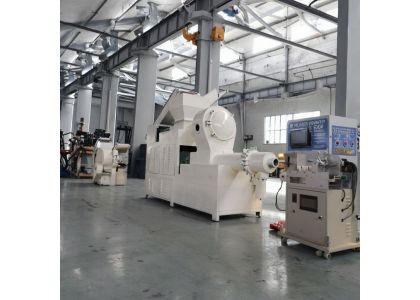
The global soap manufacturing industry continues to evolve as consumer demand, environmental regulations, and production technologies rapidly change. From personal care soap to laundry bars and hotel soap products, manufacturers are investing in more efficient and intelligent production systems to improve product quality and reduce operational costs.
In 2026, automation, sustainability, and flexible manufacturing have become the key driving forces behind modern soap production lines.
As labor costs rise and market competition intensifies, many factories are upgrading from semi-automatic systems to fully automatic soap manufacturing lines. Automated production helps manufacturers achieve:
Higher production efficiency
Stable product consistency
Lower material waste
Reduced labor dependency
Faster packaging and distribution
Modern soap production lines can integrate mixing, milling, plodding, stamping, cutting, cooling, and packaging into one continuous process. This significantly improves overall factory productivity.
In large-scale industrial production, automatic soap packaging machines also play an important role in improving packaging speed and reducing manual handling errors.
Environmental sustainability is becoming increasingly important in the soap industry. Consumers and retailers are paying closer attention to eco-friendly production methods and packaging materials.
Many soap factories are now focusing on:
Energy-saving production equipment
Water recycling systems
Reduced chemical emissions
Biodegradable packaging materials
Palm oil sustainability compliance
Manufacturers are also optimizing production formulas to reduce raw material waste while maintaining product performance and appearance.
Energy-efficient soap processing lines are helping factories lower electricity consumption and improve long-term operational sustainability.
Digital transformation is influencing nearly every stage of industrial manufacturing, including soap production.
Advanced factories are adopting smart technologies such as:
PLC automatic control systems
Touch-screen monitoring interfaces
Real-time production data analysis
Remote equipment diagnostics
Automated fault detection systems
These technologies improve equipment reliability and allow operators to monitor production conditions more accurately.
Smart manufacturing also helps factories respond more quickly to market demand changes and customized product requirements.
Today’s market requires manufacturers to produce a wider variety of soap products, including:
Beauty soap bars
Laundry soap
Antibacterial soap
Herbal soap
Transparent soap
Hotel guest soap
Medicated soap
Modern soap making equipment is designed to support flexible production capacity and rapid mold changes. This flexibility allows factories to handle small batch customization while maintaining industrial-scale output.
As private label manufacturing grows globally, flexible soap production systems are becoming increasingly valuable for OEM and contract manufacturers.
Product consistency remains one of the most critical factors in soap manufacturing. High-quality soap products require precise control over:
Moisture content
Fragrance distribution
Soap hardness
Weight accuracy
Surface finishing
Packaging integrity
Advanced production lines use automated sensors and precision control systems to maintain stable manufacturing standards throughout the process.
Reliable quality control not only improves customer satisfaction but also reduces production waste and return rates.
The future of soap manufacturing will likely focus on intelligent automation, sustainable production, and flexible factory management.
As global demand for hygiene and personal care products continues to increase, manufacturers will continue investing in advanced soap production technologies that improve efficiency, reduce environmental impact, and support customized product development.
Factories that adopt smart production systems and modern manufacturing strategies are expected to remain more competitive in the evolving international market.
The soap manufacturing industry is entering a new stage of technological innovation and sustainable development. Automated production lines, energy-efficient equipment, and intelligent factory systems are reshaping how soap products are manufactured worldwide.
For manufacturers, staying updated with industry trends and production technologies is becoming increasingly important for long-term growth and operational efficiency.
Shijiazhuang Ruisheng Machinery Manufacturing Co., Ltd was established in 1992, who has more than 30 years professional experience in soap machinery manufacturing. It has become a specialized production manufacturer that integrates scientific research, production processing, installation, and service. The main products include soap noodle vacuum dryer, soap noodle pelletizer, soap material mixer, soap material grinding machine, duplex vacuum plodder, soap stamping machine, cutting machine, conveyors and the machinery related to transparent soap production line, laundry soap production and toilet soap production line....[ read more ]


