
Miki@bestsoapmachine.com
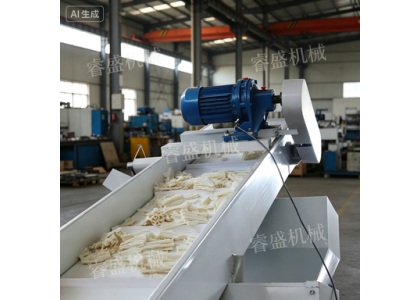
Professionally customized soap conveyors are specially designed for transporting toilet soap, laundry soap, transparent soap, soap blanks and other daily chemical products. As core conveying equipment connecting all working procedures in soap production lines, it links feeding, freezing, cutting, sorting and packaging processes to achieve smoother and more efficient production operation.
Adopting stable frame structure with high-quality materials and exquisite workmanship, the machine runs steadily without shaking. It avoids soap surface scratches, extrusion deformation and material dropping during conveying, perfectly preserving the appearance and quality of finished soaps and greatly reducing material loss.
Equipped with high-quality anti-slip conveying surface, it meets the conveying demands of soft and hard soap blanks and finished soaps. The conveying angle can be adjusted freely to realize inclined conveying, horizontal conveying and turning conveying easily. Wear-resistant transmission parts operate smoothly with low noise, stable in long-term continuous operation with low failure rate and steady production capacity.
Built with simple speed regulation control system, the conveying speed is adjustable freely to precisely match the operating speed of freezers, cutters, grinders and other supporting equipment. It realizes seamless connection of the whole production line, eliminates the inefficiency of manual handling and greatly cuts labor costs.
Reasonable and compact body design keeps the surface smooth and free from soap dirt and oil stains, easy to clean with water. Featuring excellent moisture-proof and rust-proof performance, it is perfectly suitable for humid daily chemical workshop environment. It occupies small space and is easy to install, compatible with new and old production lines of all scales.
Various types are available for customization, including mesh belt type, belt type and chain plate type. Customized length, width, height and feeding/discharging specifications are supported, suitable for simple conveying in small workshops and mass automatic conveying in large factories.
Get rid of inefficient manual handling. High-quality soap conveyors connect all production processes, accelerate production rhythm, standardize production flow and guarantee product quality. It helps daily chemical soap manufacturers reduce costs, improve efficiency and realize large-scale automatic production.
Conveyor belt / mesh belt deviation and lateral offset, causing soap dropping and irregular placement.Operation jamming, unsmooth start and stop, intermittent sudden stop and idle slipping.Unstable conveying speed with frequent speed changes, mismatching the running pace of freezers and cutters.Abnormal loud noise from transmission chains and rollers, exceeding normal operating noise level.Severe motor overheating, overload tripping after long-time operation and insufficient feeding power.
Over-hard belt surface or improper grain pattern lead to soap surface scratches and indentations.Insufficient friction on conveying surface causes sliding, stacking and congestion of soft soap blanks.Slippage on inclined sections results in soap back flow and abnormal feeding.Unreasonable spacing causes extrusion deformation, adhesion and damage of soaps.Material jamming at corners and joints leads to production halt.
High humidity in workshops causes rust and corrosion of frames and bearings, shortening service life.Soap liquid and dirt adhere to belts and gaps, hard to clean and easy to produce stains.Accumulated oil and soap sludge hinder roller rotation and worsen belt deviation and wear.Poor moisture-proof performance causes circuit electric leakage and switch failure.Residual materials hidden in body gaps get mildewed over time and affect production hygiene.
Inflexible adjustment of height and inclination, failing to match height difference of upstream and downstream equipment.Malfunction of speed regulating system, invalid speed adjustment and gear jamming.Unfirm frame fixation causes overall shaking and displacement during high-speed operation.Incorrect customized length leads to material breakage in production line connection.Unreasonable design of inlet and outlet causes unsmooth feeding and discharging as well as material spilling.
Belts and mesh belts are prone to aging, cracking and elongation, requiring frequent replacement.Easy wear and damage of bearings and idlers result in high maintenance frequency.Failure of tensioning device leads to loose belts and frequent deviation.Lack of protective parts brings collision risks and potential safety hazards.Poor universality of wearing parts causes trouble in later purchasing and replacement.
Insufficient load-bearing capacity causes deformation and sagging during mass material conveying.Belts become hard and brittle in low temperature and easy to break with poor cold resistance.Low load capacity of small conveyors cannot meet high-capacity production line demands.Time-consuming shutdown debugging affects continuous operation of the whole soap production line.
Shijiazhuang Ruisheng Machinery Manufacturing Co., Ltd was established in 1992, who has more than 30 years professional experience in soap machinery manufacturing. It has become a specialized production manufacturer that integrates scientific research, production processing, installation, and service. The main products include soap noodle vacuum dryer, soap noodle pelletizer, soap material mixer, soap material grinding machine, duplex vacuum plodder, soap stamping machine, cutting machine, conveyors and the machinery related to transparent soap production line, laundry soap production and toilet soap production line....[ read more ]


