
Miki@bestsoapmachine.com
In many regions across the globe, people lack consistent access to soap. Without it, the consequences are far from trivial — they trigger systematic public health crises.
The World Health Organization confirms that hand washing with soap is one of the most effective ways to prevent infectious diseases. Even so, millions of people still struggle to obtain soap reliably.
Thus, the real question is never simply “Do we have soap?”
Instead, it is:Can we produce soap in sufficient quantities, at high speed, and at an affordable cost?
Traditional handmade soap-making may seem artisanal, yet it is completely incapable of large-scale mass production.
It comes with inconsistent quality, slow output, heavy labor reliance, and severe raw material waste. Small-batch handmade production is barely sustainable.
However, when demand surges — whether amid public health emergencies, population growth, or supply shortages — traditional soap-making methods quickly collapse. This marks the start of the industry’s core dilemma.
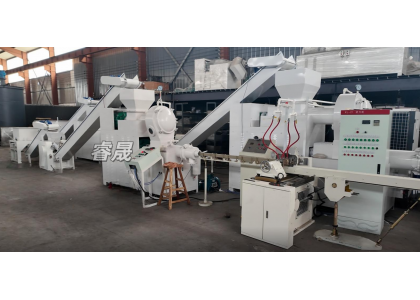
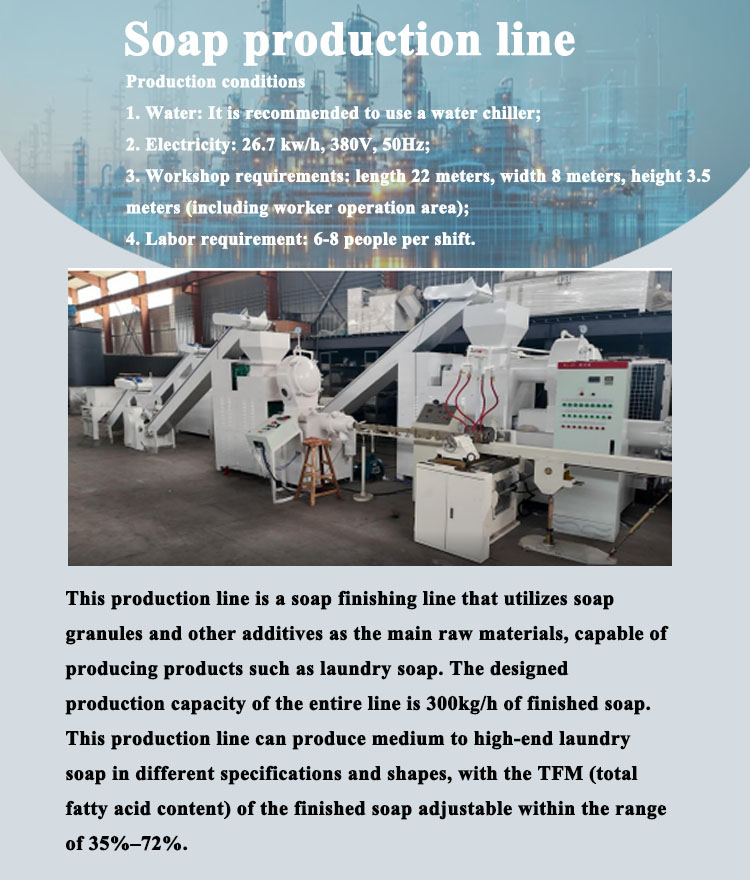
Simply put, these are complete sets of equipment designed for automated or semi-automated soap production. They cover every production stage: from blending raw materials such as fats and alkalis, to soap shaping, cutting, drying and curing, and final product packaging.
Core equipment includes:
· Soap mixers
· Refining machines
· Three-roll mills
· Vacuum plodders
· Stamping machines
· Chilling machines
· Two-stage rotary vane vacuum pumps
· Matching electric motors
This machinery bridges traditional handmade soap-making and modern industrial production, enabling high-volume standardized manufacturing. High-efficiency soap production equipment allows rapid commissioning and operation.
Soap production involves highly corrosive chemical ingredients, and equipment requires long-term continuous operation. Premium machines adopt 304/316 stainless steel or specially coated metal materials to resist chemical corrosion and rust, avoiding mid-production breakdowns and material contamination.
Equipment adapts to production demands of all scales: compact models for small local workshops, and large industrial assembly lines for non-stop mass processing. Strong versatility allows machines to adapt to shifting market needs.
Initial investment and operating costs are balanced with production efficiency and product quality. Energy-saving motors, intelligent automatic control systems, and low-maintenance designs greatly reduce long-term operating costs — especially critical for manufacturers in developing regions and small-scale producers.
Modern machinery is equipped with smart sensors and programmable logic controllers (PLCs). They deliver precise control over ingredient ratios, molding pressure, drying temperature and other key parameters, unifying product standards and minimizing human error.
Emerging Economies: In Southeast Asia, Africa and other regions, compact soap-making equipment empowers small entrepreneurs to enter local markets with low investment, improve livelihoods, and support grassroots hygiene promotion programs.
· Cost Reduction: Automation cuts labor expenses, minimizes raw material waste, shortens production cycles and boosts output.
· Eco-Friendly Production: Energy-saving designs and water-efficient processes comply with global environmental regulations, supporting low-carbon manufacturing.
· Stable Product Quality: Standardized production delivers uniformly shaped, durable high-quality soap that meets consumer demands.
· Social Empowerment: Establishing local soap production in underserved areas improves hygiene conditions, reduces infection rates, and safeguards basic human dignity.
· Brand Upgrading: Advanced production technology ensures unified product quality, enhancing brand reputation and market credibility.
All industrial technologies have limitations. The soap manufacturing industry currently faces three major challenges:
1. Complex intelligent equipment structures lead to difficult maintenance in resource-limited areas;
2. High-end machinery comes with high costs, creating financial pressure for small producers;
3. The supply chain for core spare parts of specialized equipment is unstable.
Q1: What types of soap products can this production line manufacture?Universal equipment features strong compatibility. It can produce bath soap, laundry soap, liquid soap, as well as medicated soap, decorative craft soap and other specialty products. Production lines can be adjusted by modifying ingredient formulas and molding parameters, with built-in customized adjustment settings for different formulations.
Q2: What is the overall energy consumption of the complete soap production machinery? Are daily electricity costs high?Energy consumption varies by equipment specification and automation level. High-efficiency mainstream models operate at 1.5–10 kW. Modern machines adopt variable frequency drive systems to intelligently regulate energy use and reduce waste.
Q3: Can equipment be expanded and upgraded to increase output when orders grow in the future?Yes. Most machines adopt a modular design with diverse specifications. Manufacturers can start with small-scale equipment and gradually expand production capacity alongside rising demand, flexibly controlling production costs and output.
Q4: How to maintain and clean equipment daily to effectively prevent cross-contamination of raw materials?Modern soap machines are equipped with CIP (Clean-In-Place) systems or easy-to-disassemble structures for thorough manual cleaning. Regular maintenance schedules and operator training eliminate cross-contamination and extend equipment service life.
Professional soap manufacturing equipment continuously drives the upgrading of the daily chemical industry, reshaping production models, market competition patterns and the global light manufacturing ecosystem.
With core strengths including stable efficiency, energy conservation, intelligent upgrading and customized adaptation, soap machinery empowers entrepreneurs and manufacturers. It meets growing domestic and international market demand through green, standardized and intelligent production.
Amid industrial transformation and upgrading, selecting a reliable soap machinery partner with innovative technology and long-term development value helps enterprises gain a firm foothold and seize opportunities in fierce market competition. The intelligent new era of the soap machinery industry is coming at full speed.
For equipment quotations, production line planning and one-stop customized solutions, feel free to consult RS at any time.
Product video:
https://caiyuanbao.alicdn.com/2da476065ce29979/c71191d385ebac2e/20260626_6e87ed6d6c7da90f_571322470175_473345368640986_published_mp4_264_hd_taobao.mp4?auth_key=1782469668-0-0-e497e4f5aa13e9bf0e8d2d8802c07db9&biz=community-0856bdd26054d159&t=213e03dd17824669686581979e0f0c&t=213e03dd17824669686581979e0f0c&b=community&p=cloudvideo_http_cbu_jihuohui
Shijiazhuang Ruisheng Machinery Manufacturing Co., Ltd was established in 1992, who has more than 30 years professional experience in soap machinery manufacturing. It has become a specialized production manufacturer that integrates scientific research, production processing, installation, and service. The main products include soap noodle vacuum dryer, soap noodle pelletizer, soap material mixer, soap material grinding machine, duplex vacuum plodder, soap stamping machine, cutting machine, conveyors and the machinery related to transparent soap production line, laundry soap production and toilet soap production line....[ read more ]


