
Miki@bestsoapmachine.com
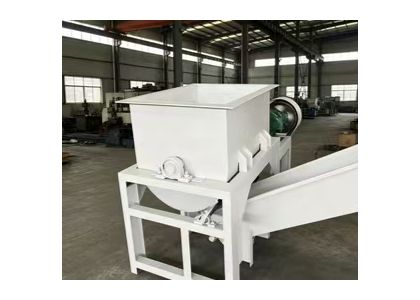
Introduction: The High Cost of a "Simple" Process
In the global soap and detergent industry, manufacturers are currently caught between two fires: the rising cost of raw materials (like palm oil and premium fragrances) and the increasingly picky demands of consumers for "perfect" soap bars. Whether you are producing high-end transparent beauty soaps or high-volume laundry bars, your brand’s reputation is won or lost long before the soap reaches the stamping machine. It is won at the very beginning of the line—in the mixing stage.
Many factory owners view mixing as a simple task of stirring ingredients together. However, data from industrial audits suggests that over 25% of product rejections and nearly 15% of raw material waste are direct results of inefficient mixing. If the heart of your production line—the Mixer—is failing to perform, your entire business is bleeding profit.
Industry Pain Point 1: The "Fragrance and Color" Money Pit
Fragrances and colorants are the most expensive additives in any soap formulation. A common struggle for manufacturers, especially in developing markets, is "patchy" distribution. If your mixer lacks sufficient torque or suffers from mechanical "dead zones," the fragrance will cluster in certain areas of the batch while others remain scentless.
To compensate, manufacturers often over-pour these expensive liquids, driving up the cost per bar significantly. A professional-grade mixing system doesn’t just stir; it ensures molecular-level integration, allowing you to achieve a premium scent and vibrant color while using the minimum necessary dosage of additives.
Industry Pain Point 2: The Structural Integrity Crisis (Cracking)
Have you ever received complaints from distributors about soap bars cracking after a few weeks on the shelf? This is rarely a fault of the formula itself; it is usually a physical failure in the mixing stage. Air bubbles trapped in the soap base during poor mixing create microscopic voids. When the soap dries or is shipped through different climates, these voids cause the bar to lose structural integrity and crack. By utilizing a heavy-duty mixer designed for deep-layer homogenization, you ensure a dense, resilient soap base that withstands the rigors of global shipping.
The Solution: The Ruisheng Professional Mixing System
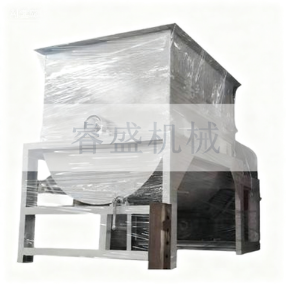
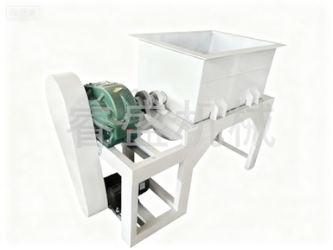
At Shijiazhuang Ruisheng Machinery, we have spent over 30 years observing these manufacturing bottlenecks. Our professional mixing series is engineered not as a standalone machine, but as a "Profit Safeguard" for your facility.
Beyond Stirring—Deep Refinement:
Our mixers utilize a high-torque drive system that treats the soap base with the force required to break down lumps and incorporate active ingredients into every single grain. This is particularly critical for transparent soap production, where any inconsistency leads to a cloudy, unmarketable product.
Space-Efficient, High-Output Design:
We understand that floor space in a modern factory is expensive. Our designs prioritize a compact footprint without sacrificing batch capacity, allowing you to scale your production without needing a larger facility.
Sustainability through Efficiency:
By optimizing the motor performance, our mixing systems deliver maximum rotational force with controlled energy consumption. This reduces your monthly utility bills while significantly cutting down on material waste due to batch errors.
A Case Study in Success
An African customer once faced a high defective rate due to the color streaking issue in laundry soap. After replacing their original mixer with Ruisheng professional stirring system, the defective rate dropped significantly within the first month. Thanks to more uniform mixing, they also reduced fragrance consumption without compromising the product scent.
Q1: What types of soap products can this production line manufacture?
Universal equipment features strong compatibility. It can produce bath soap, laundry soap, liquid soap, as well as medicated soap, decorative craft soap and other specialty products. Production lines can be adjusted by modifying ingredient formulas and molding parameters, with built-in customized adjustment settings for different formulations.
Q2: What is the overall energy consumption of the complete soap production machinery? Are daily electricity costs high?
Energy consumption varies by equipment specification and automation level. High-efficiency mainstream models operate at 1.5–10 kW. Modern machines adopt variable frequency drive systems to intelligently regulate energy use and reduce waste.
Q3: Can equipment be expanded and upgraded to increase output when orders grow in the future?
Yes. Most machines adopt a modular design with diverse specifications. Manufacturers can start with small-scale equipment and gradually expand production capacity alongside rising demand, flexibly controlling production costs and output.
Q4: How to maintain and clean equipment daily to effectively prevent cross-contamination of raw materials?
Modern soap machines are equipped with CIP (Clean-In-Place) systems or easy-to-disassemble structures for thorough manual cleaning. Regular maintenance schedules and operator training eliminate cross-contamination and extend equipment service life.
Professional soap manufacturing equipment continuously drives the upgrading of the daily chemical industry, reshaping production models, market competition patterns and the global light manufacturing ecosystem.
With core strengths including stable efficiency, energy conservation, intelligent upgrading and customized adaptation, soap machinery empowers entrepreneurs and manufacturers. It meets growing domestic and international market demand through green, standardized and intelligent production.
Amid industrial transformation and upgrading, selecting a reliable soap machinery partner with innovative technology and long-term development value helps enterprises gain a firm foothold and seize opportunities in fierce market competition. The intelligent new era of the soap machinery industry is coming at full speed.
For equipment quotations, production line planning and one-stop customized solutions, feel free to consult RS at any time.
Conclusion: Invest in the Foundation
The mixer is the silent engine of your soap factory. It defines the texture, the scent, the appearance, and ultimately, the profitability of your brand. Don’t let an outdated mixing process be the "invisible killer" of your margins.
Are you ready to elevate your product quality? Contact our engineering team today for a tailored consultation on optimizing your mixing process.
Shijiazhuang Ruisheng Machinery Manufacturing Co., Ltd was established in 1992, who has more than 30 years professional experience in soap machinery manufacturing. It has become a specialized production manufacturer that integrates scientific research, production processing, installation, and service. The main products include soap noodle vacuum dryer, soap noodle pelletizer, soap material mixer, soap material grinding machine, duplex vacuum plodder, soap stamping machine, cutting machine, conveyors and the machinery related to transparent soap production line, laundry soap production and toilet soap production line....[ read more ]


